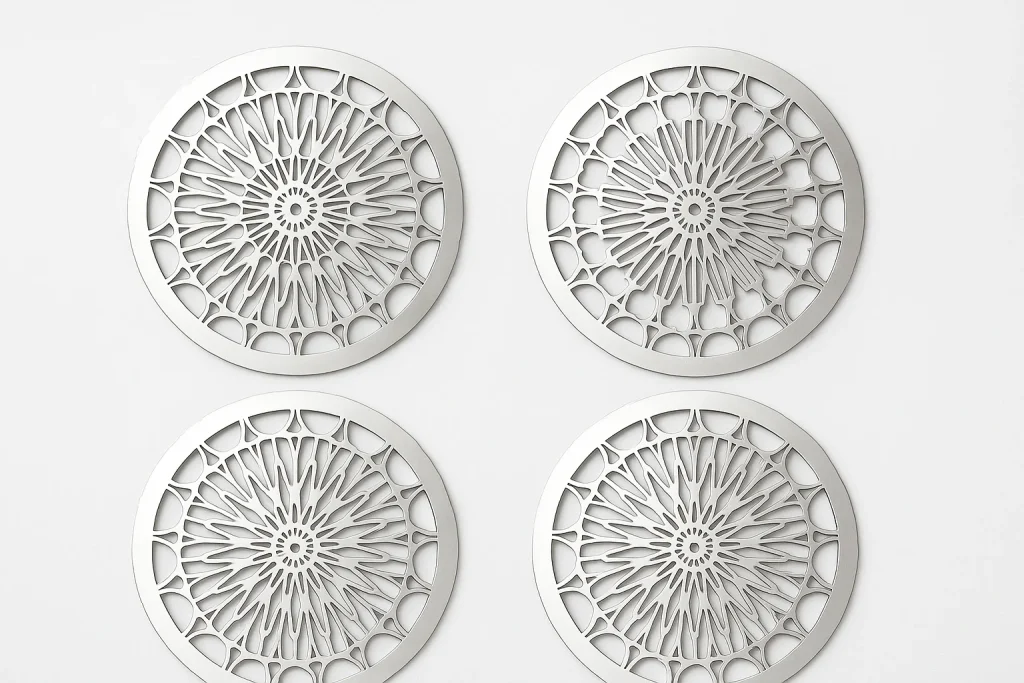
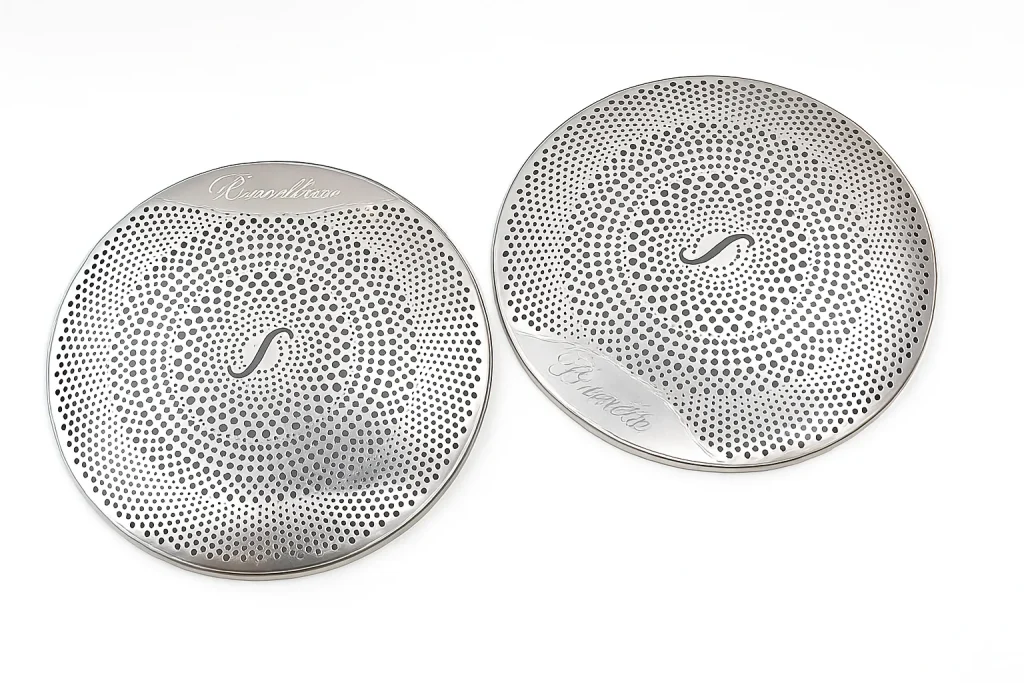
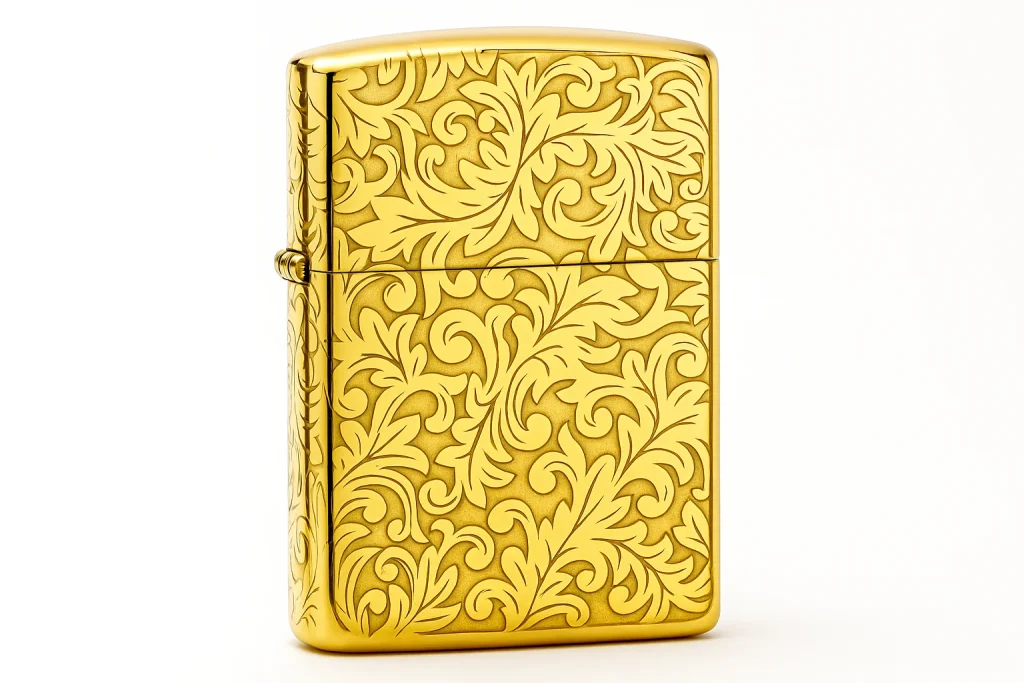
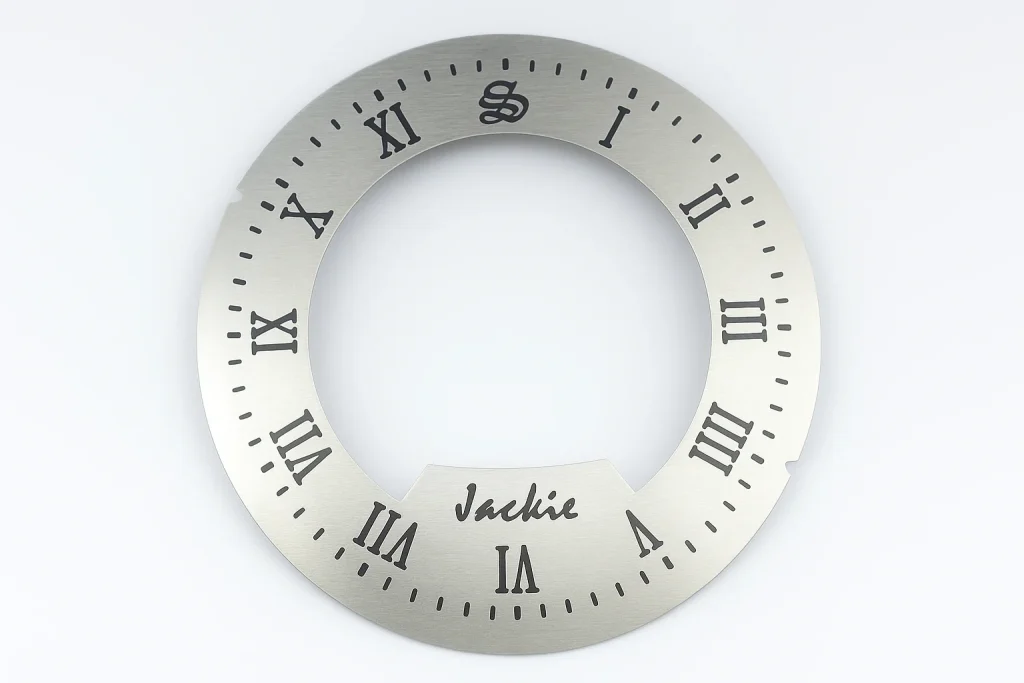
The color of an etched surface depends on the material and etching depth.
It generally appears as a matte or semi-gloss metallic tone, with slight variations in shade.
When combined with subsequent processes such as anodizing, bead blasting, or dyeing, various aesthetic effects can be achieved.
| Surface Roughness | Etching Depth | Accuracy | Corrosion Resistance | Surface Condition |
|---|---|---|---|---|
| Controllable within Ra 0.2–3.2 μm | Typically 0.01–0.3 mm, adjustable as required | Dimensional deviation within ±0.01 mm for fine pattern etching | Post-treatment (e.g., passivation or oxidation) recommended to prevent re-corrosion | Uniform, fine, and free from mechanical stress or deformation |
Can be performed by chemical etching or electrolytic etching, applicable to various metals and alloys.
Capable of producing fine lines, patterns, or markings with micron-level precision.
Ensures uniform surface treatment, suitable for complex geometries and thin-walled components.
Etching depth and surface roughness are controllable according to design requirements.
Compatible with subsequent finishing processes such as passivation, anodizing, or painting.