

Sheet Metal Fabrication Services
Expert solutions for complex structural bending and assembly. Whether for rapid prototyping or mass production, we guarantee on-time delivery with uncompromised quality.
Advantage: One-stop surface finishing | High cost-efficiency.
Get Instant Quote
CNC
Machining
3D
Printing
Printing
Sheet Metal
Fabrication
Injection
Molding
What is Sheet Metal Fabrication?
Sheet metal fabrication refers to the process of using mechanical equipment and various techniques to process and shape sheet metal into the desired form and function. It is widely used in multiple industries, such as automotive, construction, aerospace, and electronics. Sheet metal fabrication is capable of producing components of various shapes and sizes, and it meets the demands of large-scale production.
How CNC Machining Works
The working principle of CNC machining is simply to control the machine tool automatically to process parts using computer programs. The specific steps are as follows:
01
05
step 01
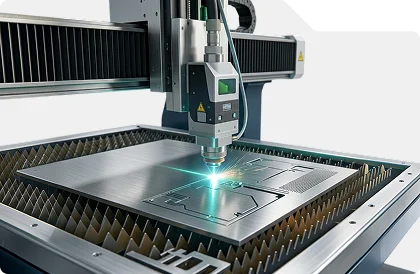
Cutting
Techniques such as shearing, laser cutting, and plasma cutting are used to cut the sheet metal into the required shape. This is the first step in the fabrication process, and precise cutting ensures the smooth continuation of subsequent operations.
step 02
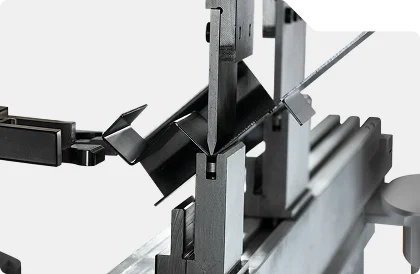
Bending
Metal sheets are bent to the required angles and shapes using a press brake or bending machine. This process is commonly used for parts that require curves or specific angle configurations.
step 03
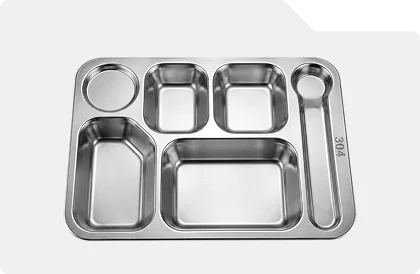
Forming
Techniques like stamping and stretching are used to form the metal sheet into specific geometric shapes. These processes can produce more complex structures and shapes, often used for parts requiring particular 3D forms.
step 04
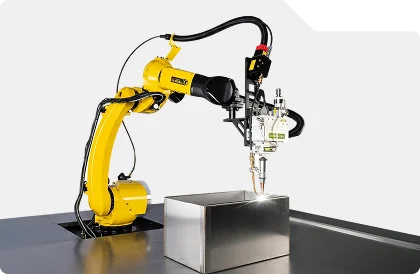
Welding
Welding techniques, such as TIG welding, MIG welding, and spot welding, are employed to join multiple metal components together, ensuring the strength and stability of the final assembly.
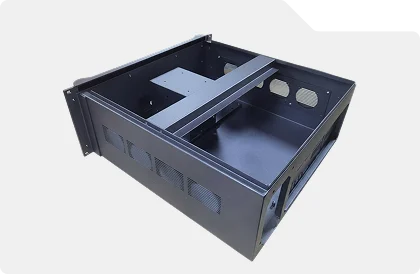
step 05
Surface Treatment
After fabrication, metal parts undergo surface treatments such as painting, electroplating, and polishing to enhance their appearance, corrosion resistance, and durability.
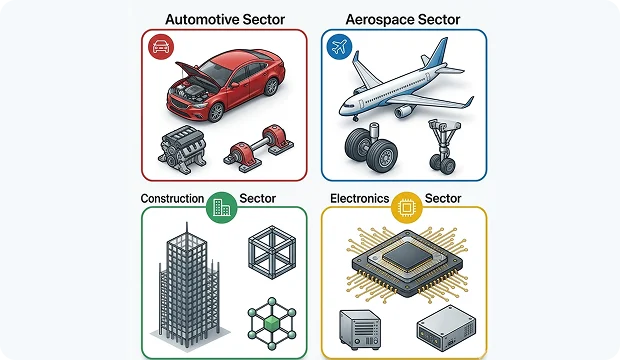
Applications of Sheet Metal Fabrication
Sheet metal fabrication is suitable for mass production and can efficiently process complex-shaped metal parts. Due to its efficiency and flexibility, this process plays a critical role in modern manufacturing industries, especially in automotive, aerospace, construction, and electronics sectors.
Sheet Metal Fabrication Characteristics
Advantages
Drawbacks
Fast Production Cycle
Sheet metal fabrication adopts advanced cutting, bending and automation technologies to shorten production cycles, enabling fast transition from prototyping to mass production.
Flexible Production Scale
Sheet metal fabrication fulfills diverse demands—from small-batch custom parts to large-scale production—with quantities from a few to tens of thousands tailored to customer needs.
Cost Efficiency
Sheet metal fabrication is relatively cost-effective, particularly for large-scale production, as it can significantly reduce unit costs while maintaining product quality and precision.
Advantages
Diverse Material Options
Sheet metal fabrication processes diverse metals (aluminum, steel, stainless steel) to deliver flexible solutions for various industries.
Variety of Surface Treatments
A range of surface treatments is available, including painting, anodizing, and electroplating, to meet functional and aesthetic requirements, ensuring both appearance and durability.
Durability
The metal materials used in sheet metal fabrication have excellent corrosion resistance and durability, making them suitable for long-term use and able to withstand high loads. This is especially ideal for high-strength components in industrial equipment and building structures.
Size Limitations
Sheet metal fabrication may encounter challenges when dealing with extremely large parts, limited by the size of the material and the capacity of the processing equipment. Certain complex geometric shapes may not be feasible.
High Precision Requirements
For parts that require very high precision, sheet metal fabrication may struggle to meet extremely tight tolerances, requiring additional precision machining steps, which can increase costs.
Drawbacks
Design Limitations
Sheet metal fabrication is best suited for producing simple to moderately complex parts. For highly intricate designs or parts with detailed requirements, other manufacturing methods may be necessary.
Finishes
Common Finishes for Aluminum
Common Finishes for Steel
| Process Name | Description | Typical Color |
|---|---|---|
| Anodized | Forms a dense oxide layer on the aluminum surface through electrolysis, enhancing corrosion resistance, hardness, and wear resistance. Can be colored or left in natural metal color. Suitable for structural parts, decorative components, and electronic housings. | Silver, Black, Gold, Red, Blue, etc. (can be adjusted by dyeing) |
| Electrically Conductive Oxidation | Special electrochemical treatment creates a thin conductive oxide layer, maintaining aluminum conductivity while improving corrosion resistance. Commonly used in electronic structural parts, connectors, or heat dissipation components. | Silver-gray or natural aluminum color |
| Bead Blast + Anodized Color | First bead blasted to create a uniform matte surface, then anodized and colored. Aesthetic, corrosion-resistant, with a matte finish and smooth touch. Suitable for high-end appearance parts. | Matte silver, matte black, matte gold, other custom colors |
| Bead Blast | High-speed sand particles impact the aluminum surface to form a uniform matte texture, improving feel or providing a base for subsequent anodizing. Suitable for decorative and industrial parts. | Matte silver or natural aluminum color |
| Brushed | Sandpaper or wire wheels create elongated texture in one direction, forming a decorative metal surface with comfortable touch. Suitable for panels and decorative components. | Silver, gray, gold, etc. |
| Process Name | Description | Typical Color |
|---|---|---|
| Nickel Plating | Plating a layer of nickel on steel improves corrosion resistance and wear resistance. Surface is smooth and bright, providing decorative effect. Suitable for hardware parts, molds, and electronic components. | Silver-white, gray-white |
| Galvanization | Zinc layer is formed via electroplating or hot-dip galvanizing. Common anti-corrosion process for steel parts. Resistant to humid and hot environments. Suitable for structural parts and bolts. | Silver-gray, matte gray |
| Chrome Plating | Chrome layer on steel surface provides high hardness, wear resistance, and mirror brightness. Commonly used for decorative parts, tools, and molds. | Mirror silver, high-gloss silver |
| Black Oxide | Forms a thin black oxide layer on steel surface, preventing rust and reducing reflection. Suitable for hardware and mechanical parts. | Black or dark gray |
Default Tolerances (For Drawings Without Specified Tolerances)
| Processing Method | Default Tolerance Range | Description |
|---|---|---|
| Cutting | ±0.02 inches (±0.5 mm) to ±0.04 inches (±1.0 mm) | Varies depending on the cutting method (e.g., laser cutting, plasma cutting) and material thickness. |
| Bending | ±0.04 inches (±1.0 mm) to ±0.08 inches (±2.0 mm) | Dependent on the bending angle precision, usually set by bending dies. |
| Stamping/Forming | ±0.02 inches (±0.5 mm) to ±0.04 inches (±1.0 mm) | Depends on material thickness, stamping pressure, and die accuracy. |
| Hole Size | ±0.008 inches (±0.2 mm) to ±0.02 inches (±0.5 mm) | For standard holes, the accuracy of hole size affects assembly fit. |
| Dimensions | ±0.02 inches (±0.5 mm) to ±0.04 inches (±1.0 mm) | Common tolerance for sheet metal parts, but tighter tolerances can be requested for high-precision requirements. |
Ommonly Used Equipment in Sheet Metal Processing
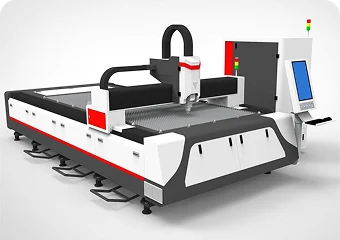
Laser Cutting Machine
High-precision cutting of metal sheets, suitable for complex shapes.
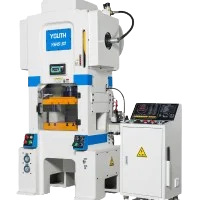
CNC Punching Machine
Performs punching, notching, and forming operations; ideal for batch production.
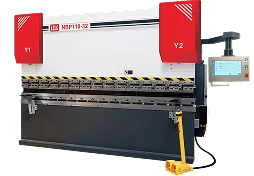
Press Brake / Bending Machine
Bends sheet metal into various
angles and shapes; core forming
equipment.
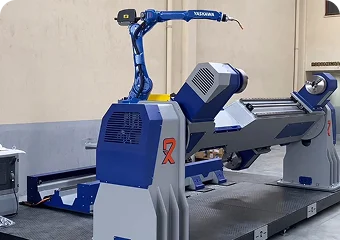
Welding Machine (TIG / MIG)
Used for assembly and welding of sheet metal parts; provides strong and clean joints.
Get instant quote