

3D Printing Services
The ultimate choice for functional prototypes. We offer high-precision Resin, Nylon, and Metal printing to help you bridge the gap from CAD design to physical parts at lightning speed.
Advantage: Save 70% of time | Reduce costs by 50%.
Get Instant Quote
CNC
Machining
3D
Printing
Printing
Sheet Metal
Fabrication
Injection
Molding
What is 3D Printing?
3D printing (also known as additive manufacturing) is a technology that builds three-dimensional objects by sequentially adding material layer by layer. Unlike traditional manufacturing methods, 3D printing uses computer control to gradually add material according to a digital model, creating complex physical objects.
Working Principle of 3D Printing:
Design Model:
First, a 3D model is created using Computer-Aided Design (CAD) software. After the design is complete, an STL or OBJ file is generated, which is the file format that 3D printers can read and execute.
Slicing Process:
The 3D model is divided into many thin layers using slicing software. The 3D printer then prints layer by layer based on these slices. The thickness of each layer typically ranges from a few microns to several millimeters.
Printing Process:
Based on the sliced files, the 3D printer gradually heats and extrudes materials (such as plastics, metals, ceramics, etc.), or uses lasers and other technologies to solidify the material, until the object is completely printed.
Post-Processing:
Some 3D printed objects may require post-processing, including the removal of support structures, surface polishing, or coloring, to achieve a better appearance and functional properties.
Features of CNC Machining
Advantages
Drawbacks
Fast and Consistent
Quickly removes large amounts of metal material, ensuring parts are completed in just one day, with an efficient and stable production process.
High Precision
Offers extremely high precision, with tolerances ranging from ±0.005” to ±0.01”, depending on customer specifications.
Diverse Material Options
Choose from over 50 different metals and plastics, providing a wide selection to meet various needs.
Advantages
Flexible Production Scale
CNC machining allows for scalable production, suitable for producing between 1 and 100,000 parts.
Tailored Surface Finishes
Suitable for various substrates, ensuring the surface finish of the parts matches the final product.
Cost-Effective
Low investment in tooling and preparation costs, making it economical for producing simple-structured parts.
Structural Limitations
Complex interlocking or hollow structures are difficult to process with CNC machining, and should be avoided.
Drawbacks
Scale Limitations
While CNC machining is efficient, the unit cost and lead time do not decrease as much as with injection molded parts.
Detailed Working Principles of Six 3D Printing Technologies
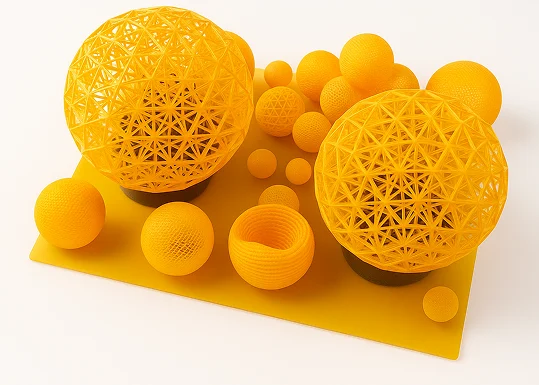
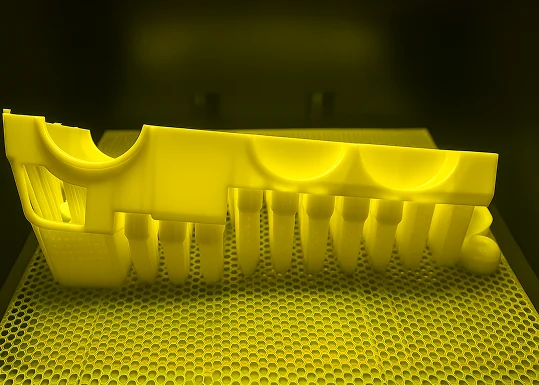
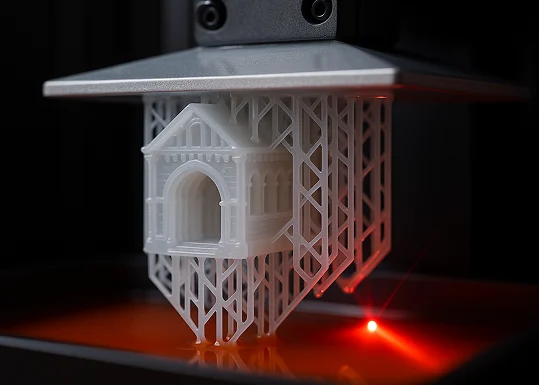
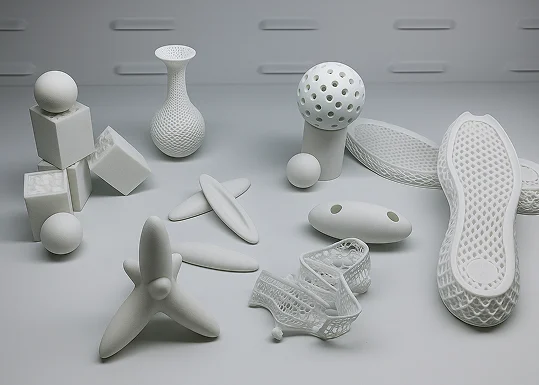
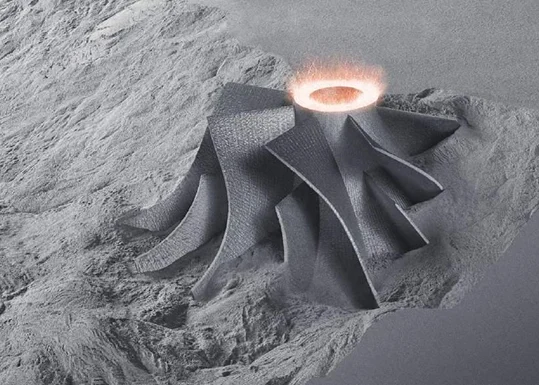
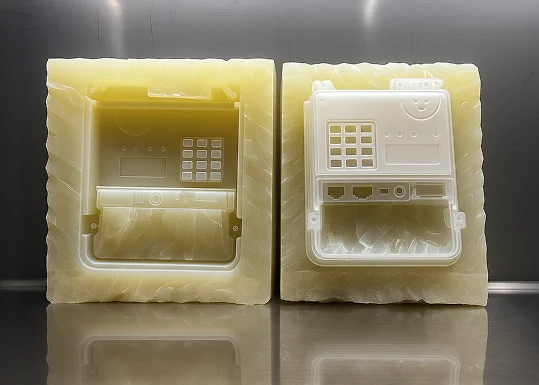
Fused Deposition Modeling (FDM)
Stereolithography (SLA)
Digital Light Processing (DLP)
Selective Laser Sintering (SLS)
Selective Laser Melting (SLM)
Vacuum Casting
Fused Deposition Modeling (FDM):
Working Principle:
It is a low-cost 3D printing solution that builds parts layer-by-layer by heating and extruding thermoplastic filaments; materials used include, for example, PLA and ABS.
Stereolithography (SLA):
Working Principle:
It utilizes a UV laser to trace and cure liquid photosensitive resin point-by-point, achieving the highest level of surface finish and detail accuracy; materials used include, for example, clear resins and engineering resins.
Digital Light Processing (DLP):
Working Principle:
It uses digital projected light as the source to rapidly cure the entire cross-section of liquid photosensitive resin, offering faster printing speeds than SLA; materials used include, for example, fast-curing general-purpose resins.
Selective Laser Sintering (SLS):
Working Principle:
This process uses a CO2 laser to selectively sinter nylon-based powder, characterized by its ability to build durable components without support structures; materials used include, for example, PA12/Nylon 12.
Selective Laser Melting (SLM):
Working Principle:
It uses a powerful, high-energy laser to fully melt metal powder, manufacturing dense and robust final-use metal components; materials used include, for example, 316L stainless steel and titanium alloys.
Vacuum Casting
Working Principle:
This non-additive process utilizes vacuum pressure to cast two-component polyurethane into a silicone mold, achieving high-fidelity replication. It commonly uses a 3D-printed part as the master pattern; materials used include, for example, PU resins.
Core Technology Comparison
| Technology | Core Process | Main Materials | Light/Power Source | Precision/Surface Quality | Features/Advantages | Typical Applications |
|---|---|---|---|---|---|---|
| FDM | Fused Deposition | Thermoplastic filaments (PLA, ABS) | Heated extruder head | Low, with visible layer lines | Low cost, easy operation, many color options; anisotropic strength, requires support structures. | Concept models, functional prototypes, education, DIY |
| SLA | Photopolymerization (Liquid Resin) | Liquid photosensitive resin | UV laser (point scanning) | Extremely high, smooth surface | Highest precision, strong detail performance; resin can age and become brittle, requires post-processing cleaning. | Precision parts, jewelry casting, dental models, high-precision prototypes |
| DLP | Photopolymerization (Liquid Resin) | Liquid photosensitive resin | UV projector (area exposure) | High, smooth surface | Single-layer print speed usually faster than SLA; pixelation may cause "stair-step" effects. | Similar to SLA, especially for batch printing small parts |
| SLS | Powder Bed Fusion | Nylon and other thermoplastic powders | CO2 laser (sintering) | Good, slightly rough surface | High strength, heat-resistant; no need for support structures (powder self-supporting); surface often porous. | Functional prototypes, complex tubing, small batch production |
| SLM | Powder Bed Fusion | Metal powders (titanium, steel, aluminum) | High-power fiber laser (full melting) | Good, high density | Produces fully dense, high-strength metal parts; expensive equipment, requires professional operation and safety measures. | Aerospace, medical implants, automotive high-performance parts |
| Vacuum Casting | Replication Process | Polyurethane | Vacuum environment | Extremely high, near injection molding quality | Small batch replication, wide material choices (e.g., soft rubber, transparent parts); limited mold life. | Small batch production, product trial runs, exhibit models |
Summary
These six technologies can be categorized based on their core principles:
Extrusion-Based: FDM
Photopolymerization: SLA and DLP (Key difference: Light source and imaging system—laser scanning vs. area projection)
Powder Bed Fusion: SLS and SLM (Key difference: Materials and processing—sintered plastic powder vs. fully melted metal powder)
Replication Process: Vacuum Casting (Not strictly 3D printing, but closely related and complementary)
Choosing the appropriate technology depends on specific requirements, such as cost, material needs, precision, strength, and the application scenario (e.g., prototype verification or final part manufacturing).
Core Technology Comparison
| 3D Printing Types | Technical Characteristics | Common Materials | Material Type | Typical Applications |
|---|---|---|---|---|
| Fused Deposition Modeling (FDM) |
Technical Features: This technology uses thermoplastic filaments, which are extruded layer by layer through heating. The equipment cost is low, and the materials are widely available, making it the most popular desktop 3D printing technology. |
PLA | thermoplastic plastic | Environmental protection, easy to print, low warpage, low odor, low cost, easy to operate |
| ABS | thermoplastic plastic | High strength, heat resistance, but easy to warp, need to heat the bed, closed environment | ||
|
Core Applications: Concept prototypes, functional test parts, educational models, DIY creations. |
PETG | thermoplastic plastic | Strength toughness balance, weather resistance, good adhesion layer, transparent | |
| Nylon (PA) | engineering plastics | High strength, wear resistance, good toughness, high temperature printing, strong moisture absorption | ||
| Stereolithography (SLA) / Digital Light Processing (DLP) |
Technical Features: Curing photosensitive resin using a laser (SLA) or projection light source (DLP), offering high printing accuracy and excellent surface smoothness. |
Standard Resin | photosensitive resin | High precision, smooth surface, excellent detail, laser/projection curing, extremely high precision |
| Engineering Resin | photosensitive resin | High strength, heat resistance, high toughness, post-curing to improve performance | ||
| Flexible Resin | photosensitive resin | Good elasticity, flexibility, impact resistance, suitable for soft parts | ||
|
Core Applications: High-precision models, jewelry casting, dental medical applications, figurine production. |
Transparent Resin | photosensitive resin | High transmittance, polishable, optical parts | |
| High-temperature Resin | photosensitive resin | High heat resistance, high HDT, can withstand thermal testing | ||
| Selective Laser Sintering (SLS) |
Technical Features: Utilizing laser sintering of powders (such as nylon, TPU), complex geometries can be printed directly without the need for support structures. The resulting parts have high strength, making them suitable for functional components. |
Nylon (PA12) | Engineering plastic powder | High strength, wear resistance, good stability, unsupported molding complex structure |
| TPU | elastomer powder | High elasticity, tear resistance, excellent molding of flexible parts | ||
| Selective Laser Melting (SLM) |
Technical Features: Using high-energy lasers to fully melt metal powders, the finished product has a fully dense structure, with performance comparable to forged parts. |
Stainless Steel | metal powder | High strength, corrosion resistance, complete melting into a dense structure |
| Titanium Alloy | metal powder | High specific strength, biocompatibility, light weight and corrosion resistance | ||
|
Core Applications: Aerospace, medical implants, high-performance molds, racing components. |
Aluminium Alloy | metal powder | Lightweight, high thermal conductivity, heat treatable | |
| Vacuum Casting |
Technical Features: Although not a 3D printing technology, it is often combined with 3D printing. A silicone mold is made from a 3D printed prototype, and then polyurethane resin is cast in a vacuum to replicate the part. |
Polyurethane Resin (PU) | casting resin | Can simulate ABS, PP, soft rubber, vacuum environment casting copy |
| Silicone Rubber | elastomer | High flexibility, good replication accuracy, used as mold material |