Custom parts made easier, faster!
Comprehensive Manufacturing Solutions
Online Chat
EN
Pickling
Your one-stop manufacturing and surface treatment solution. Perform CNC machining, sandblasting, anodizing, or powder coating on your metal and plastic parts in as little as 5 days.
Get instant quote
Pickling
Definition and Function
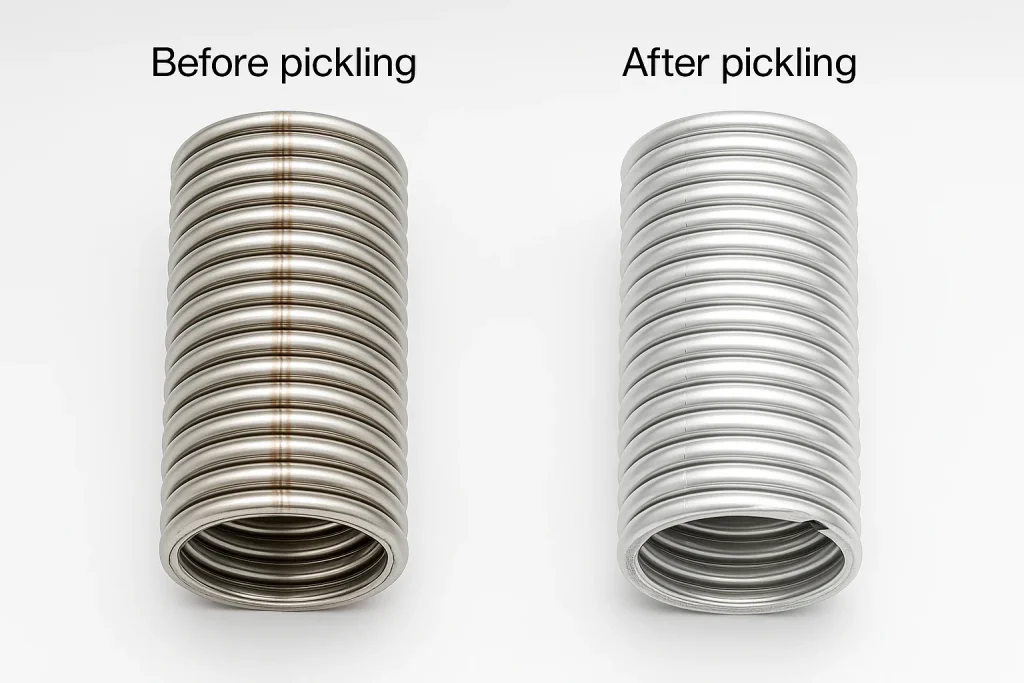
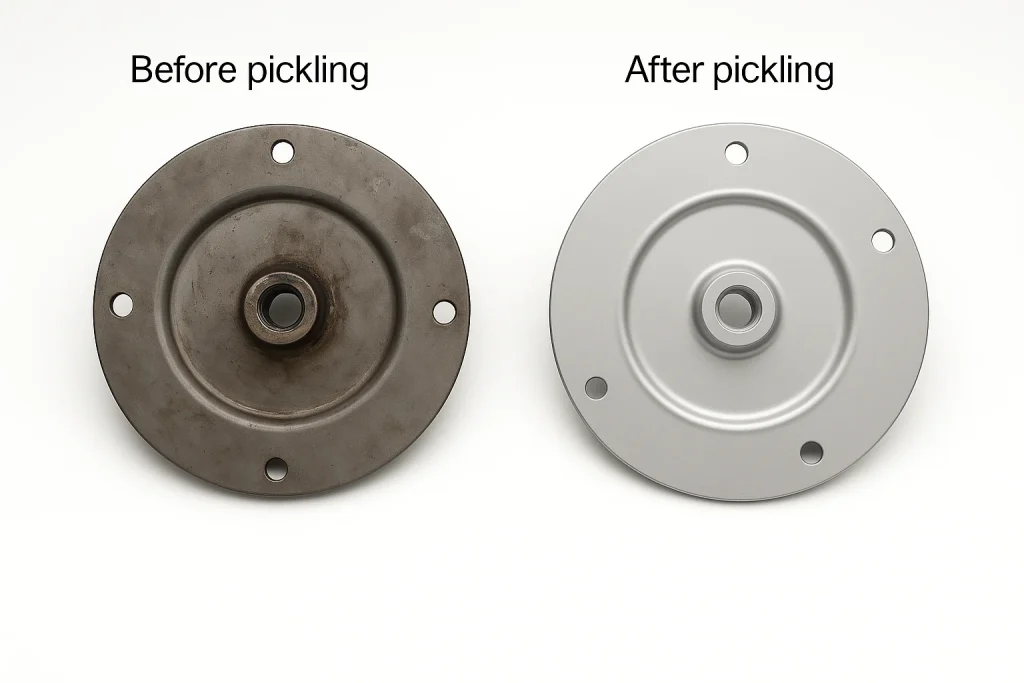
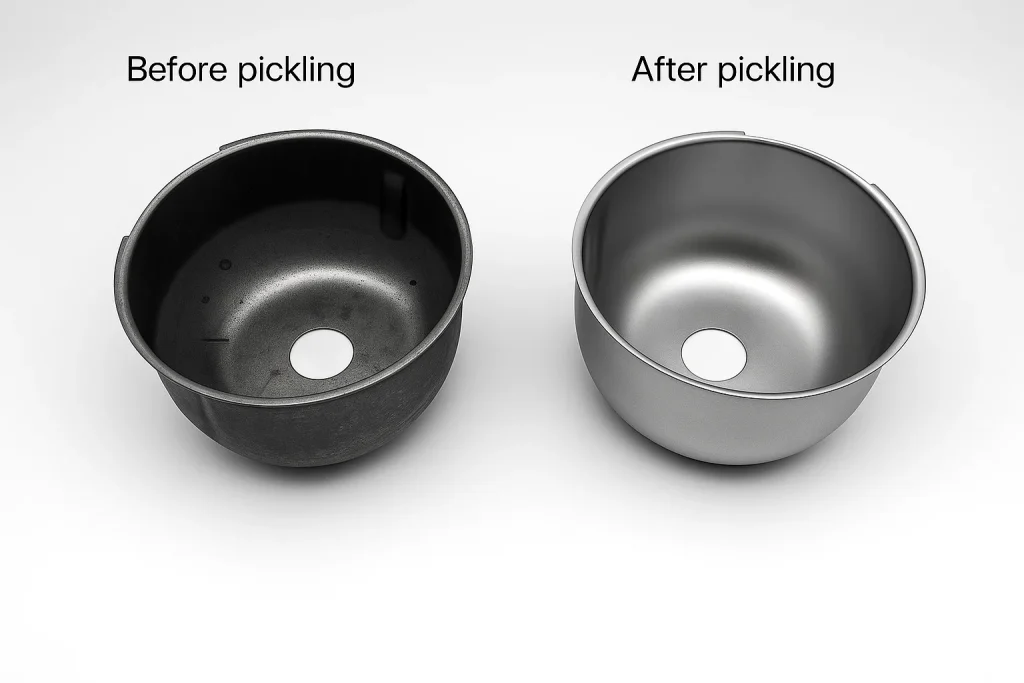
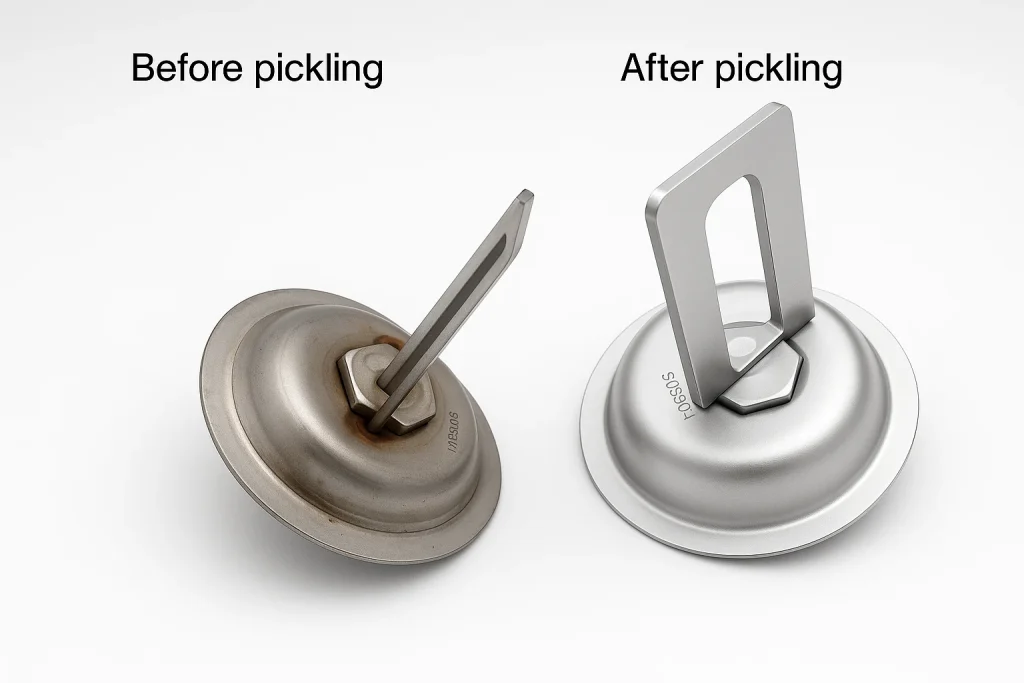
  • Pickling is a chemical surface treatment that uses acid solutions to remove oxide scales, rust, and impurities from metal surfaces. Through the chemical reaction between acid and oxides, the process restores a clean, smooth metallic surface, preparing it for subsequent treatments such as passivation, electropolishing, or painting. Its main function is to clean and activate the surface, improving adhesion and corrosion resistance in later stages.
Colors
Image 1839
Gold
Image 1834
Silver
Image 1837
Gray

After pickling, the surface exhibits a uniform metallic appearance, usually silver-gray or matte. The gloss is low, with fine etching marks that provide a good bonding surface for subsequent coatings or treatments.

Pickling 酸洗 示例3
Example of a bead-milled + anodized colored part
Pickling 酸洗 示例1
Pickling 酸洗 示例4
Pickling 酸洗 示例2
Technical Properties
Surface Condition Surface Roughness Adhesion Corrosion Typical Acid Solutions Typical Applications
clean, uniform, free of oxide scale and rust slightly increased, enhancing surface activation improved coating-to-substrate bonding enhanced when combined with passivation or coating nitric-hydrofluoric acid (for stainless steel), hydrochloric or sulfuric acid (for carbon steel) stainless steel tanks, piping, weldments, and precision mechanical components
Applicable Materials
Metals: Aluminum Stainless Steel Brass Copper Titanium Mild Steel Alloy Steel Tool Steel Spring Steel
Process Characteristics

Removes oxide layers, rust, and heat-tint discoloration via controlled acid reactions;

Suitable for stainless steel, carbon steel, and aluminum alloys;

Often followed by passivation to enhance corrosion resistance;

Requires careful control of acid concentration, temperature, and duration to prevent over-etching;

Can be performed by immersion, spraying, or acid circulation methods.