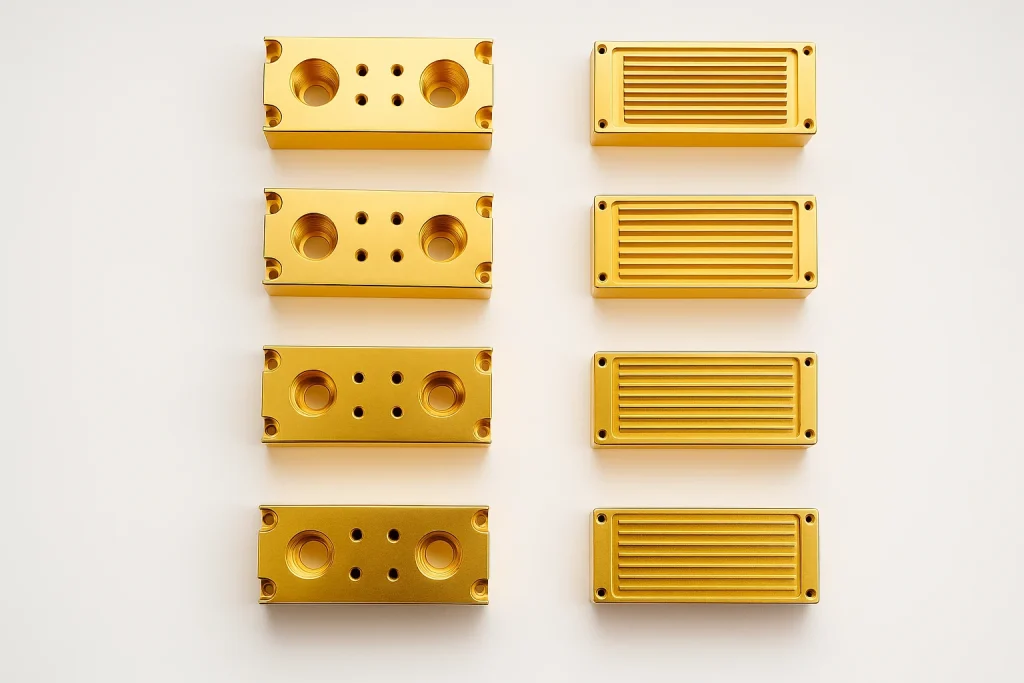
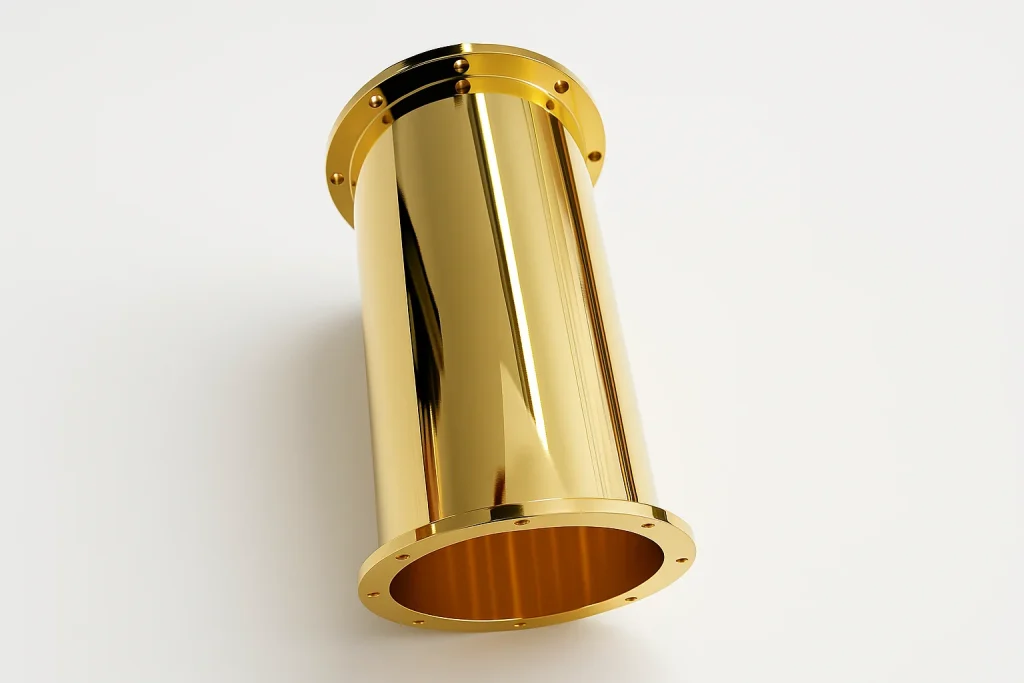
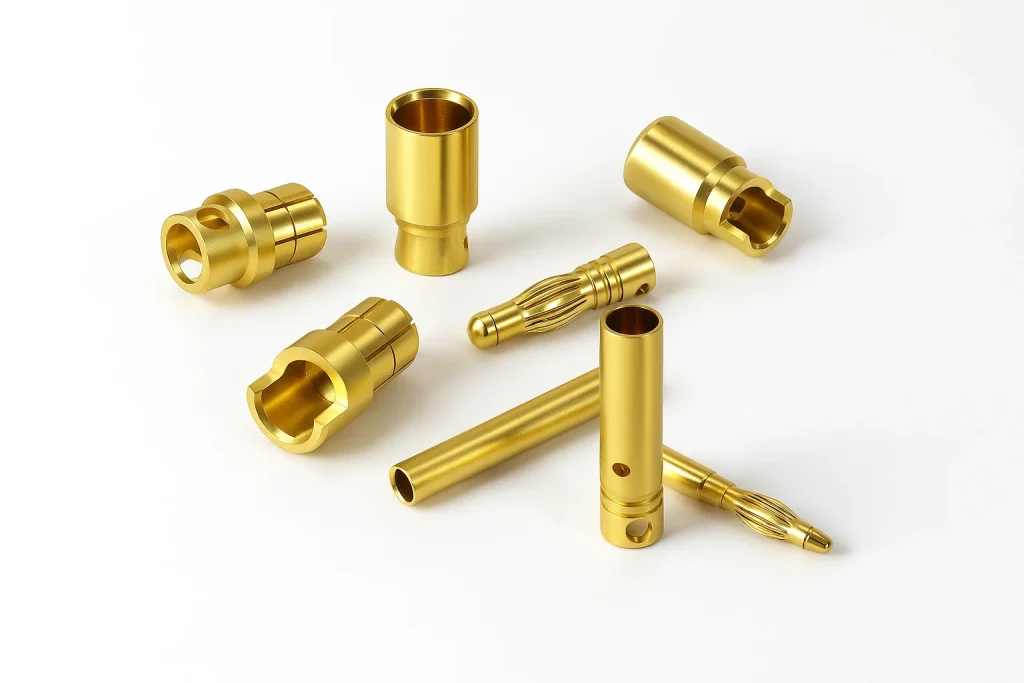
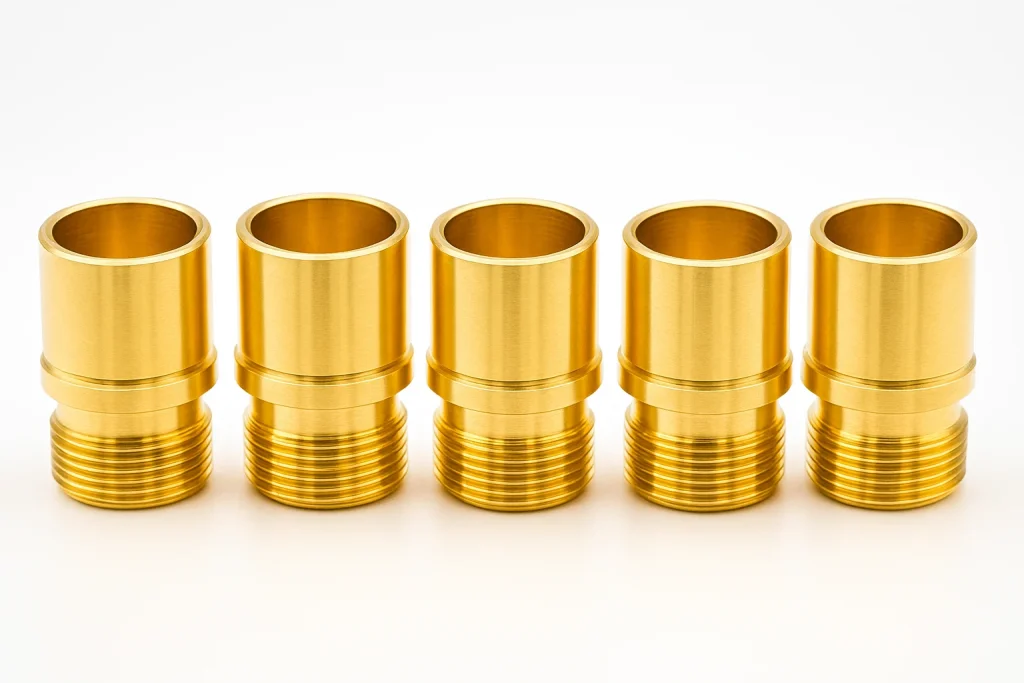
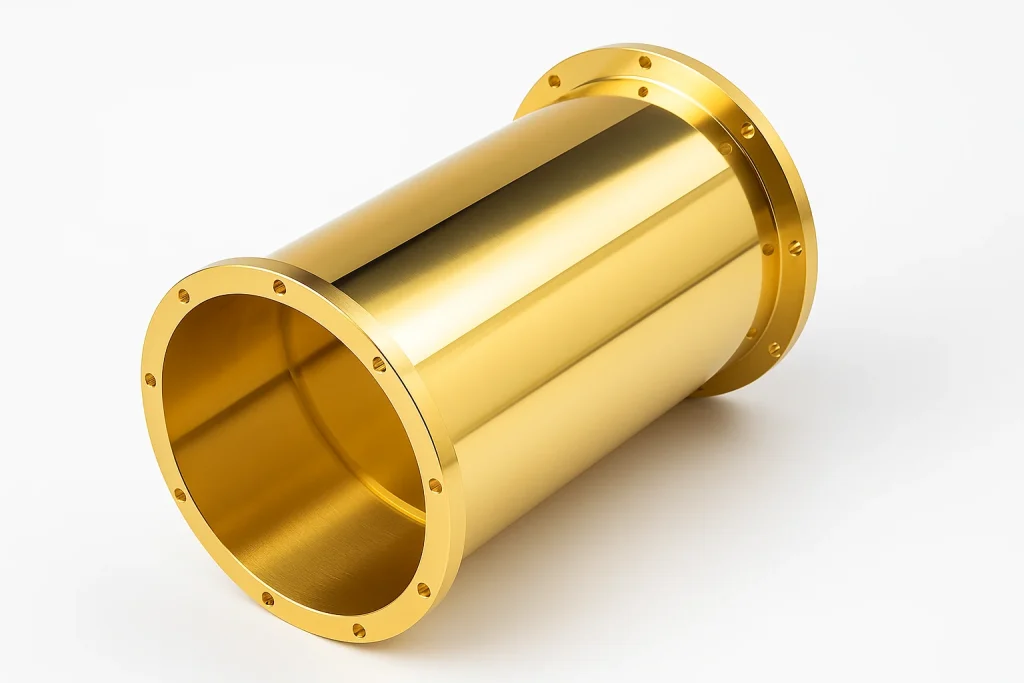
The surface of gold plating exhibits a bright or light gold luster with high reflectivity and a strong metallic texture.Different processes can achieve various surface effects, such as:
Bright Gold: High gloss with a brilliant, vivid gold color.
Matte Gold: Low reflectivity with a soft and delicate texture.
Rose Gold: A gold–copper alloy tone with a warm pink hue.
Champagne Gold: Light gold tone with an understated, elegant appearance.

| Applicable Substrates | Edge and Burr Coverage | Appearance | Adhesion | Hardness | Corrosion Resistance | Coating Thickness | Gloss |
|---|---|---|---|---|---|---|---|
| Copper, stainless steel, nickel, silver, and other metals | Excellent; the surface is smooth with no visible flow marks | Bright or soft gold color with a strong metallic texture | Excellent; meets international standards such as ASTM B488 | HV 120–200 (depending on gold purity); good wear resistance | Excellent; suitable for high-humidity and chemically corrosive environments | Typically 0.05–2 μm for functional gold plating; up to 5 μm or more for high corrosion resistance or decorative applications | High reflectivity with stable color, resistant to tarnishing |
Uniform coating with strong adhesion through electroplating or electroless plating processes.
Smooth and fine surface with a high decorative effect.
Excellent oxidation and corrosion resistance.
Superior electrical conductivity, suitable for electronic applications.
Precise pretreatment to ensure coating adhesion and stability.