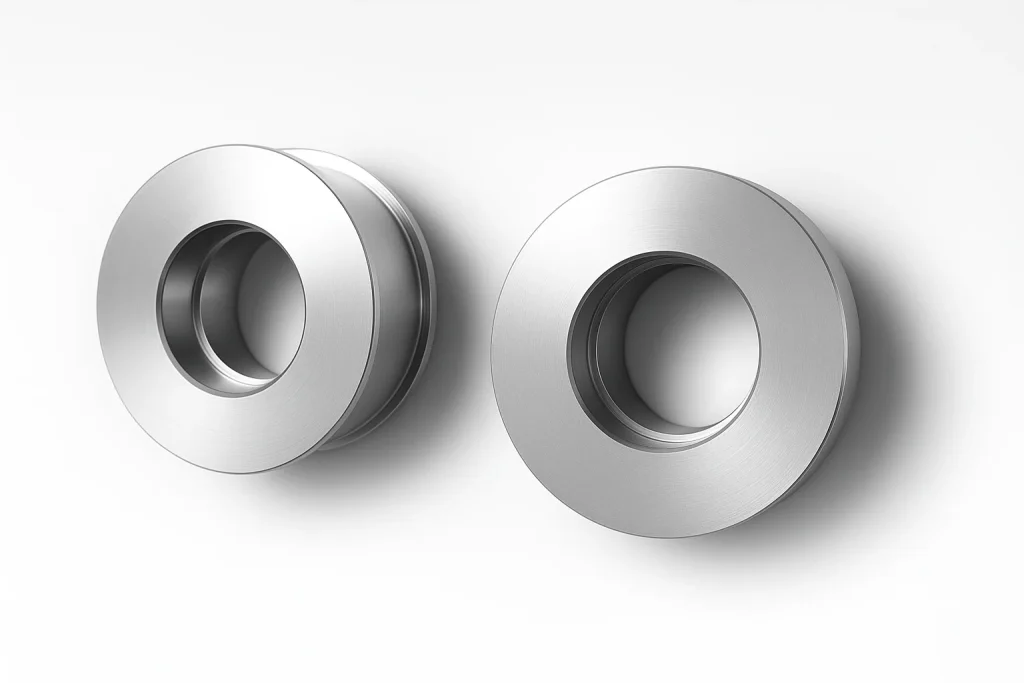
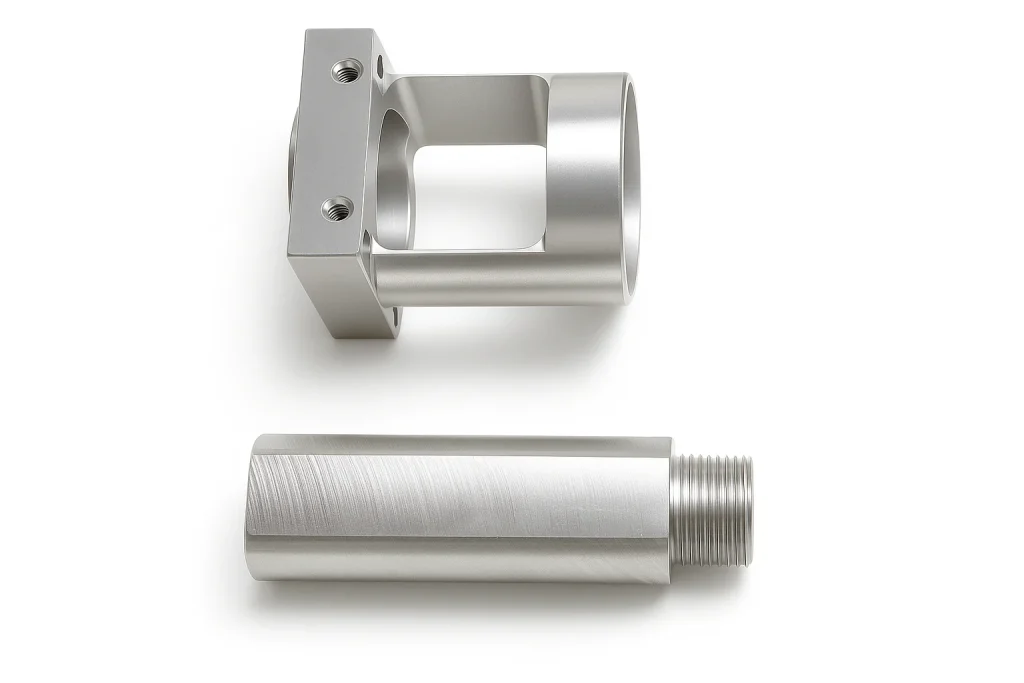
Typical colors: light gray, dark gray, black, or brown (depending on oxidation time and electrolyte parameters).
The appearance is darker than standard anodizing, with a metallic matte or semi-reflective finish.
Slight color variation between batches or different substrates is normal and acceptable.
| Applicable Materials | Burrs and Sharp Edges | Appearance | Tolerance | Electrical Conductivity | Corrosion Resistance | Post-processing |
|---|---|---|---|---|---|---|
| Metal materials, especially aluminum and aluminum alloys | Removed | Uniform conductive film with gray-to-black metallic tone | Minimal dimensional change due to the thin oxide layer; suitable for precision electrical assemblies | Surface resistivity ≤ 0.05 Ω·cm² (depending on process parameters) | Good for indoor electrical applications; enhanced resistance achievable with composite finishing | Suitable for direct electrical assembly, spot welding, threaded connections, or EMI shielding structures |
The oxide layer is thin (typically 0.5–5 μm), ensuring good conductivity with uniform thickness and strong adhesion.
The surface exhibits low resistivity and provides reliable conductivity for grounding, electrical contact, or shielding purposes.
Unlike conventional anodizing, conductive oxidation does not involve sealing, in order to maintain electrical continuity.
Parts are mounted on racks during processing; minor rack marks may remain but are usually placed in inconspicuous locations after assembly.
The surface finish is smooth and refined, offering both functional and decorative qualities.